|
Divine Comedy by Dr. Arlene S. Opina
|
|
|
Links: |
 |
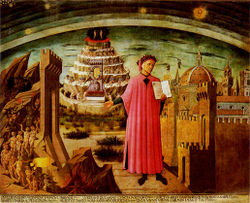
Durante degli Alighieri, mononymously referred to as Dante (/ˈdænti/, US /ˈdɑːnteɪ/; Italian: [ˈdante]; c1265--1321), was an Italian poet, prose writer, literary theorist, moral philosopher, and political thinker. He is best known for the monumental epic poem Commedia, later named La divina commedia (Divine Comedy), considered the greatest literary work composed in the Italian language and a masterpiece of world literature. In Italy he is known as il Sommo Poeta ("the Supreme Poet") or just il Poeta. Dante, Petrarch, and Boccaccio are also known as "the three fountains" or "the three crowns". Dante is also called the "Father of the Italian language". The Divine Comedy (Italian: Divina Commedia) is an epic poem written by Dante Alighieri between 1308 and his death in 1321. It is widely considered the preeminent work of Italian literature, and is seen as one of the greatest works of world literature. The poem's imaginative and allegorical vision of the afterlife is a culmination of the medieval world-view as it had developed in the Western Church. It helped establish the Tuscan dialect, in which it is written, as the standardized Italian language. It is divided into three parts: Inferno, Purgatorio, and Paradiso. |